
There’s a shift happening in content creation.
Not everyone wants to learn from a polished expert.
More and more, people want to learn from someone just a few steps ahead of them. You see it across LinkedIn, Substack, TikTok, or wherever you scroll. People aren’t waiting until they’re successful or “qualified enough” to post.
They’re sharing in real time — lessons, mistakes, their first wins, and the strategies they’re testing.
And audiences are here for it. This kind of raw, honest, in-progress sharing hits different.
“Hey, I’ve only done this once or twice — but here’s what worked and what didn’t.”
That sentence captures the essence of the new personal brand movement and exemplifies why this content style performs so well.
The key is that it signals lived experience.
It’s not positioning or overly branded messaging. It’s honest reflection that feels human and builds trust at a time when AI and content volume are clogging our feeds.
There’s a reason someone with one year of experience can go viral breaking down what they learned while someone with 10 years of experience struggles to gain traction.
It’s why there are product marketing managers with more followers than their CMOs.
The playing field has changed. Authority online is no longer built solely on credentials. And personal brand credibility isn’t reserved for seasoned executives or popular influencers.
It’s built on relatable context — your lived experience, your observations, and your ability to package them in a relatable manner.
This doesn’t mean deep expertise isn’t valuable. But it does mean you don’t need to be a self-proclaimed expert to contribute something valuable and make connections.
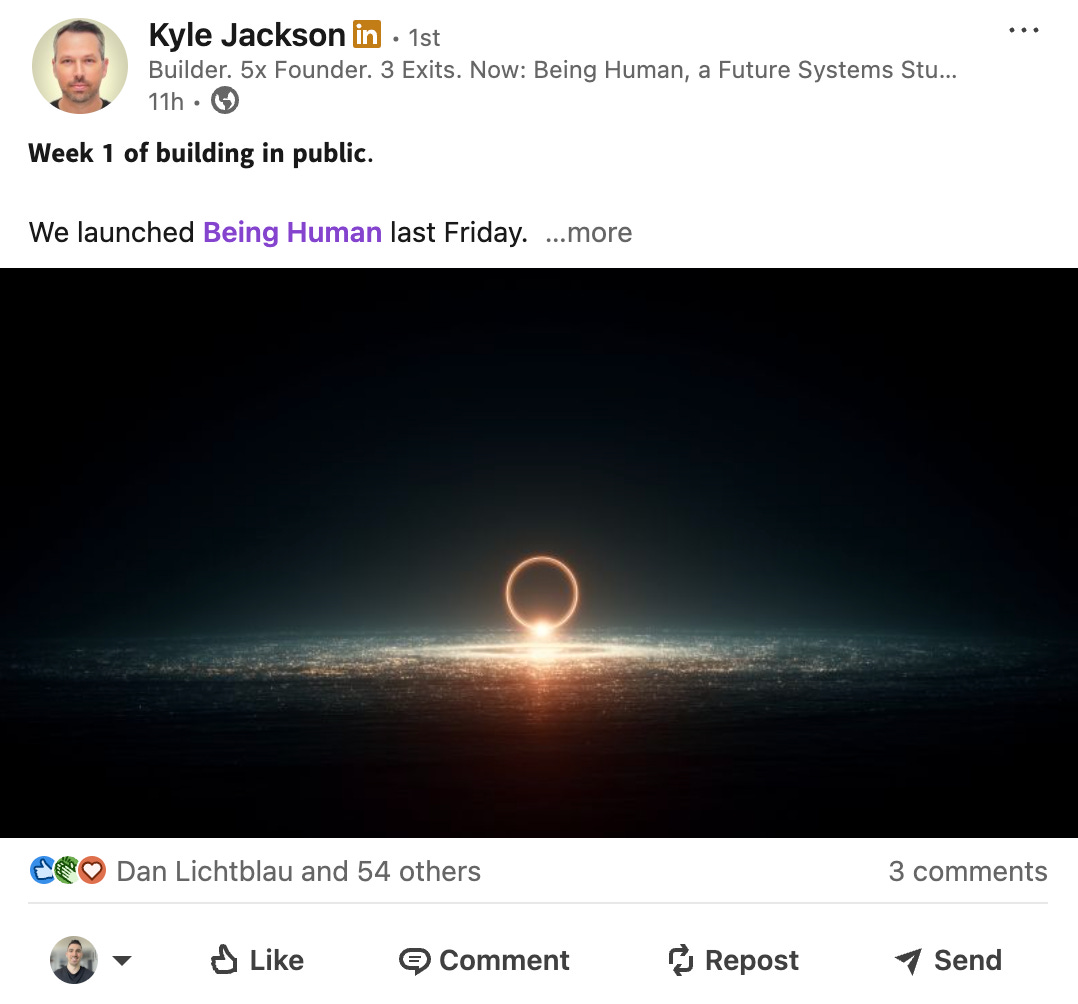
Some of my favorite recent examples of transparent, vulnerable, build-in-public-style posts:
Sometimes we learn more from someone who’s a few steps ahead than someone who’s 100 steps ahead. Because their experience is still fresh and they present it in a way that makes us feel like we aren’t hopelessly behind.
That we can do it, too.
Michell C. Clark put it perfectly in a Substack note:
“Point me to the people who don’t position themselves as all-knowing experts or oracles, but instead as vulnerable human beings using their capacity for observation and introspection to figure things out in real time.”
The internet is full of self-proclaimed gurus.
What stands out is someone who says: “Here’s what I tried. Here’s how it went. And here’s what I’d do differently.”
That mindset is fueling the personal brand boom we’re watching unfold right now. More people are becoming content creators and sharing their journeys with transparency — including plenty of people who are just getting started or starting again.
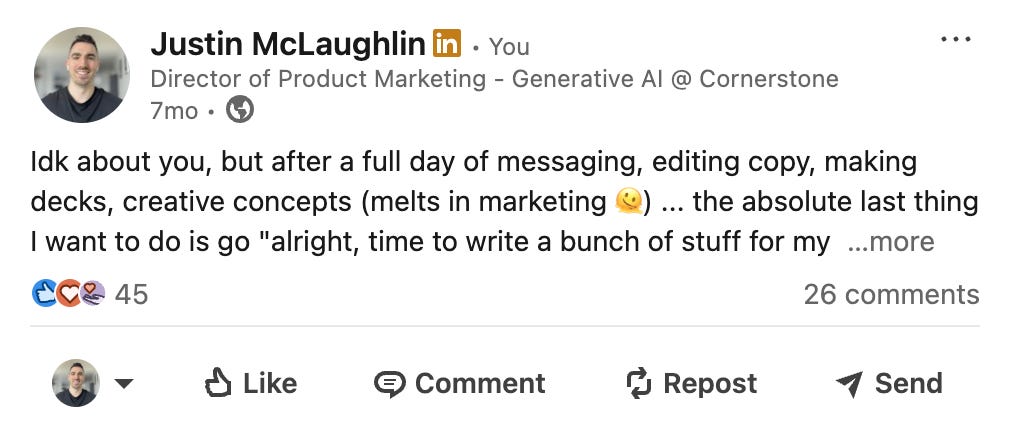
When I first got back into posting on LinkedIn in 2024, I tried to let my job title do the talking.
I was a startup VP of Marketing transitioning to a corporate product marketer. With that, I thought I could start sharing the strategy frameworks and marketing campaign tips that helped me get to where I was in my career.
They flopped.
Seven likes and 100 impressions later, my polished “this is what a marketing leader would post” takes had failed.
I kept at it. But things didn’t turn around until I took a different approach.
I shifted my tone and took the guardrails off.
I started treating LinkedIn like my work journal and let a few messy, reflection-style posts fly. I wrote about the struggle I was feeling as a marketer in today’s environment and shared some of my hardest lessons-learned.
These posts didn’t go viral. However, they were the first posts I’d shared that started real conversations.
They were also the first posts that felt therapeutic to write because they weren’t performative. They were honest, vulnerable, and perfectly imperfect.
And that’s why people related to them.
People couldn’t see themselves in my overly-branded marketing executive frameworks. But they could relate to the messy path I took along the way to my career milestones.
Not only did creating content and building my personal brand start to feel natural — so natural it didn’t feel like building a “brand” at all — but the engagement and connection my posts generated noticeably improved.
Ever since, I’ve been challenging myself not to fear sharing my story. Especially the aspects of it that didn’t go as planned, seemed like failure, or could have been better.
It turns out that stuff is the most real. And it’s exactly what people are looking for.
The next time you hesitate to post because “you’re not an expert” or “you haven’t figured it all out yet,” remember: that might be why someone wants to hear from you.
They’re looking for something relatable:
Sure, these takes might not be the most polished. But they could be what gets someone else started.
And that’s exactly what the creator economy is about right now.
Derek Hughes said it best:
Why did readers devour it instead of following six-figure experts? Because those who’ve earned $0 feel paralyzed by the gap between themselves and the masters. They crave guidance from someone just a few steps ahead who can reach back and pull them forward.
If you’ve got something to say, even if it’s still a little messy, just say it.
There’s someone a few steps back on the same journey who needs to hear from you.
Want to make your brand work for you? Subscribe to my newsletter, Brand Credential, for weekly tips and strategies to grow your audience, build authority, and turn your expertise into income.

Hi, I'm Justin and I write Brand Credential.
I started Brand Credential as a resource to help share expertise from my 10-year brand building journey.
I currently serve as the VP of Marketing for a tech company where I oversee all go-to-market functions. Throughout my career I've helped companies scale revenue to millions of dollars, helped executives build personal brands, and created hundreds of pieces of content since starting to write online in 2012.
As always, thank you so much for reading. If you’d like more personal branding and marketing tips, here are more ways I can help in the meantime:
 5 LinkedIn Social Media Marketing Tips to Increase Post Engagement
Add these LinkedIn social media marketing best practices to your brand strategy.
 10 YouTube Personal Branding Content Ideas
Looking for YouTube personal branding content ideas? Check out this blog post for a list of YouTube video ideas you can use today to grow your brand.
 What Is the Premise Behind Influencer Marketing?
Discover the power and purpose behind influencer marketing in this insightful article.
 The Essential Guide to Effective and Affordable Marketing Channels for Beginners
Discover the ultimate roadmap to successful marketing on a budget! This comprehensive guide unveils the most effective and affordable marketing channels for beginners, equipping you with the knowledge to reach your target audience and achieve remarkable results.
 Southwest Airlines Marketing Strategy: From Rapid Rewards to Convenient Travel Adventures
Discover the powerful marketing strategies that have propelled Southwest Airlines to success in this comprehensive guide.
 Omnichannel Marketing: Defined
Discover the power of omnichannel marketing and how it can revolutionize your business.